Engine code
Vehicles using Z19DT DPF engine list:
Which cars use the Z19DT DPF engine and what oil to use. Common Z19DT DPF engine faults, symptoms, diagnosis, prevention and repair.
Ask AI about any Engine code
Questions strictly about engine codes (brand/model/engine type/production years).

| Castrol MAGNATEC 5W‑30 C3 | |
|---|---|
| SAE 5W‑30 | ✔ |
| ACEA C3 | ✔ |
| API SN/CF | ✔ |
| BMW Longlife‑04 | ✔ |
| MB‑Approval 226.5 / 229.31 / 229.51 / 229.52 | ✔ |
| Opel OV 0401547‑D30 / G30 | ✔ |
| Fiat 9.55535‑S3 | ✔ |
| Renault RN0700 / RN0710 | ✔ |
| VW 505.00 / 505.01 | ✔ |
| dexos2 | ✔ |

| Liqui‑Moly Chrome C3 5W‑30 | |
|---|---|
| SAE 5W‑30 | ✔ |
| ACEA C3 | ✔ |
| API SN/CF | ✔ |
| BMW Longlife‑04 | ❌ |
| MB‑Approval 226.5 / 229.31 / 229.51 / 229.52 | ✔ |
| Opel OV 0401547‑D30 / G30 | ✔ |
| Fiat 9.55535‑S3 | ✔ |
| Renault RN0700 / RN0710 | ✔ |
| VW 505.00 / 505.01 | ✔ |
| dexos2 | ✔ |

| Ridex Plus Active Energy C2/C3 5W‑30 | |
|---|---|
| SAE 5W‑30 | ✔ |
| ACEA C3 | ✔ |
| API SN/CF | ✔ |
| BMW Longlife‑04 | ✔ |
| MB‑Approval 226.5 / 229.31 / 229.51 / 229.52 | ✔ |
| Opel OV 0401547‑D30 / G30 | ✔ |
| Fiat 9.55535‑S3 | ❌ |
| Renault RN0700 / RN0710 | ✔ |
| VW 505.00 / 505.01 | ✔ |
| dexos2 | ✔ |
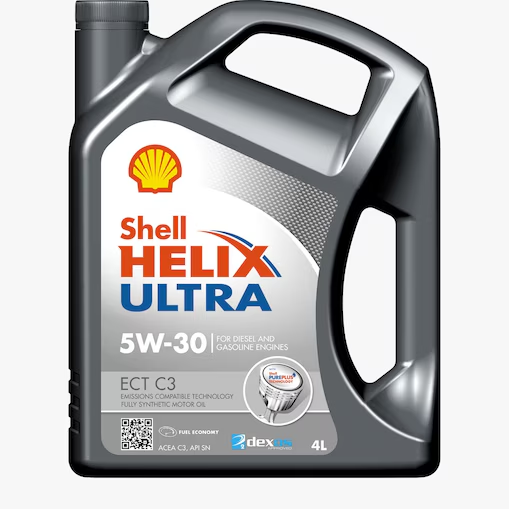
| Shell Helix Ultra ECT C3 5W‑30 | |
|---|---|
| SAE 5W‑30 | ✔ |
| ACEA C3 | ✔ |
| API SN/CF | ✔ |
| BMW Longlife‑04 | ✔ |
| MB‑Approval 226.5 / 229.31 / 229.51 / 229.52 | ✔ |
| Opel OV 0401547‑D30 / G30 | ✔ |
| Fiat 9.55535‑S3 | ✔ |
| Renault RN0700 / RN0710 | ✔ |
| VW 505.00 / 505.01 | ✔ |
| dexos2 | ❓ |
Oil specification key
✔ – Meets the required specification
❓ – Not explicitly stated (use caution; check your vehicle manual)
❌ – Does not meet required specification. Use may cause engine issues.
✔ – Meets the required specification
❓ – Not explicitly stated (use caution; check your vehicle manual)
❌ – Does not meet required specification. Use may cause engine issues.
As an Amazon Associate, we may earn from qualifying purchases.
Answer generated by AI.
Oil specifications for Z19DT DPF engine
SAE 5W-30
ACEA C3
API SN
GM-LL-A-025
GM-LL-B-025
Most common problems, symptoms & fixes for the Z19DT DPF engine.
Engine Z19DT DPF
Symptoms:
- Loss of power and reduced fuel efficiency
- Warning lights related to the diesel particulate filter (DPF) or engine management
- Excessive smoke from the exhaust, especially black or white smoke
- Rough idling or stalling during low speeds or idle
- Difficulty starting the engine or misfires
Diagnosis:
- Check for DPF clogging using diagnostic tools to read fault codes and monitor DPF pressure sensors
- Inspect the turbocharger for wear or damage, as it affects air supply and combustion
- Examine the EGR (Exhaust Gas Recirculation) valve for carbon buildup causing improper operation
- Test the fuel injectors for leaks or poor spray patterns leading to incomplete combustion
- Verify the condition of the glow plugs and intake manifold for carbon deposits
- Perform a compression test to rule out mechanical engine issues
Fixes:
- Perform a forced DPF regeneration to burn off accumulated soot if clogging is detected
- Replace or clean the EGR valve to restore proper exhaust gas recirculation
- Repair or replace faulty fuel injectors to ensure correct fuel delivery
- Service or replace the turbocharger if damaged or worn
- Clean the intake manifold and throttle body to remove carbon deposits
- Replace glow plugs if faulty to improve cold starting
- In severe cases, replace the DPF unit if regeneration and cleaning fail
Prevention:
- Use high-quality, low-sulfur diesel fuel to reduce soot formation
- Regularly drive the vehicle at higher speeds to allow passive DPF regeneration
- Follow manufacturer-recommended oil change intervals using approved engine oils
- Avoid frequent short trips that prevent the engine and DPF from reaching optimal operating temperatures
- Periodically inspect and clean the EGR system and intake components
- Use diagnostic tools to monitor engine and DPF health proactively and address issues early
Symptoms:
- Loss of power and reduced fuel efficiency
- Warning lights related to the diesel particulate filter (DPF) or engine management
- Excessive smoke from the exhaust, especially black or white smoke
- Rough idling or stalling during low speeds or idle
- Difficulty starting the engine or misfires
Diagnosis:
- Check for DPF clogging using diagnostic tools to read fault codes and monitor DPF pressure sensors
- Inspect the turbocharger for wear or damage, as it affects air supply and combustion
- Examine the EGR (Exhaust Gas Recirculation) valve for carbon buildup causing improper operation
- Test the fuel injectors for leaks or poor spray patterns leading to incomplete combustion
- Verify the condition of the glow plugs and intake manifold for carbon deposits
- Perform a compression test to rule out mechanical engine issues
Fixes:
- Perform a forced DPF regeneration to burn off accumulated soot if clogging is detected
- Replace or clean the EGR valve to restore proper exhaust gas recirculation
- Repair or replace faulty fuel injectors to ensure correct fuel delivery
- Service or replace the turbocharger if damaged or worn
- Clean the intake manifold and throttle body to remove carbon deposits
- Replace glow plugs if faulty to improve cold starting
- In severe cases, replace the DPF unit if regeneration and cleaning fail
Prevention:
- Use high-quality, low-sulfur diesel fuel to reduce soot formation
- Regularly drive the vehicle at higher speeds to allow passive DPF regeneration
- Follow manufacturer-recommended oil change intervals using approved engine oils
- Avoid frequent short trips that prevent the engine and DPF from reaching optimal operating temperatures
- Periodically inspect and clean the EGR system and intake components
- Use diagnostic tools to monitor engine and DPF health proactively and address issues early