Motorkód
X30XE motorral szerelt járművek listája:
Mely autókban található a X30XE motor, és milyen motorolajat érdemes használni hozzá? A X30XE motor gyakori hibái, tünetei, diagnosztikája, megelőzése és javítása.
- OPEL - Omega B 3.0i V6 (155kW) 1994–1998
- OPEL - Sintra 3.0 (148kW) 1996–1999
- VAUXHALL - Sintra 3.0 (148kW) 1996–1999
Ajánlott motorolaj a motorhoz X30XE motor leggyakoribb problémái, tünetei és javítási megoldásai.
Kérdezd meg a MI-t bármely motorkódról
Csak motorkódokkal kapcsolatos kérdések (márka/modell/motortípus/gyártási évek).

| Castrol MAGNATEC 5W‑30 C3 | |
|---|---|
| SAE 5W‑30 | ✔ |
| ACEA C3 | ✔ |
| API SN/CF | ✔ |
| BMW Longlife‑04 | ✔ |
| MB‑Approval 226.5 / 229.31 / 229.51 / 229.52 | ✔ |
| Opel OV 0401547‑D30 / G30 | ✔ |
| Fiat 9.55535‑S3 | ✔ |
| Renault RN0700 / RN0710 | ✔ |
| VW 505.00 / 505.01 | ✔ |
| dexos2 | ✔ |

| Liqui‑Moly Chrome C3 5W‑30 | |
|---|---|
| SAE 5W‑30 | ✔ |
| ACEA C3 | ✔ |
| API SN/CF | ✔ |
| BMW Longlife‑04 | ❌ |
| MB‑Approval 226.5 / 229.31 / 229.51 / 229.52 | ✔ |
| Opel OV 0401547‑D30 / G30 | ✔ |
| Fiat 9.55535‑S3 | ✔ |
| Renault RN0700 / RN0710 | ✔ |
| VW 505.00 / 505.01 | ✔ |
| dexos2 | ✔ |

| Ridex Plus Active Energy C2/C3 5W‑30 | |
|---|---|
| SAE 5W‑30 | ✔ |
| ACEA C3 | ✔ |
| API SN/CF | ✔ |
| BMW Longlife‑04 | ✔ |
| MB‑Approval 226.5 / 229.31 / 229.51 / 229.52 | ✔ |
| Opel OV 0401547‑D30 / G30 | ✔ |
| Fiat 9.55535‑S3 | ❌ |
| Renault RN0700 / RN0710 | ✔ |
| VW 505.00 / 505.01 | ✔ |
| dexos2 | ✔ |
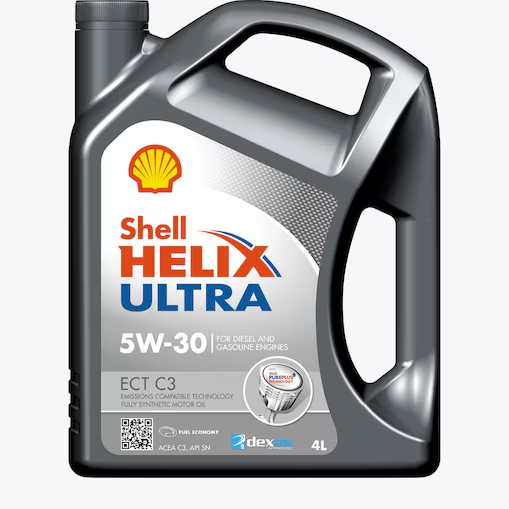
| Shell Helix Ultra ECT C3 5W‑30 | |
|---|---|
| SAE 5W‑30 | ✔ |
| ACEA C3 | ✔ |
| API SN/CF | ✔ |
| BMW Longlife‑04 | ✔ |
| MB‑Approval 226.5 / 229.31 / 229.51 / 229.52 | ✔ |
| Opel OV 0401547‑D30 / G30 | ✔ |
| Fiat 9.55535‑S3 | ✔ |
| Renault RN0700 / RN0710 | ✔ |
| VW 505.00 / 505.01 | ✔ |
| dexos2 | ❓ |
Olajspecifikációk jelmagyarázata
✔ – Megfelel az előírt specifikációnak
❓ – Nincs kifejezetten feltüntetve (óvatosan: ellenőrizd a jármű kézikönyvét)
❌ – Nem felel meg az előírt specifikációnak. Használata motorproblémákat okozhat.
✔ – Megfelel az előírt specifikációnak
❓ – Nincs kifejezetten feltüntetve (óvatosan: ellenőrizd a jármű kézikönyvét)
❌ – Nem felel meg az előírt specifikációnak. Használata motorproblémákat okozhat.
Amazon partnerként jutalékot kaphatunk a megfelelő vásárlások után.
A választ az MI generálta.
Motorolaj-specifikációk X30XE motor
SAE 5W-30
ACEA A3/B4
API SJ
VW 501.01
A X30XE motor.
Engine X30XE
Symptoms:
- Rough idling and misfires, especially during cold starts
- Loss of power and hesitation under acceleration
- Engine warning light (MIL) illumination
- Increased oil consumption and occasional smoke from the exhaust
- Overheating or coolant loss without visible leaks
Diagnosis:
- Check ignition coils and spark plugs for wear or failure, common causes of misfires
- Inspect the camshaft position sensor and crankshaft position sensor for faults
- Perform a compression test to rule out valve or piston ring issues
- Examine the intake manifold and throttle body for carbon buildup affecting airflow
- Test the coolant system for leaks, including the water pump and thermostat function
- Scan the engine control unit (ECU) for stored fault codes to pinpoint sensor or system failures
Fixes:
- Replace faulty ignition coils and worn spark plugs to restore smooth running
- Clean or replace the camshaft and crankshaft sensors if defective
- Service the intake system by cleaning the throttle body and intake manifold
- Repair or replace leaking coolant components such as hoses, water pump, or thermostat
- Address oil leaks by replacing valve cover gaskets or camshaft seals as needed
- Update ECU software if available to improve engine management and reliability
Prevention:
- Follow regular maintenance intervals for oil and filter changes using manufacturer-recommended grades
- Use quality spark plugs and ignition components to prevent misfires
- Periodically clean the intake system to avoid carbon buildup
- Monitor coolant levels and condition to prevent overheating
- Avoid prolonged idling and aggressive driving to reduce engine stress
- Schedule routine diagnostic checks to catch sensor or system issues early
By adhering to these guidelines, owners of vehicles equipped with the X30XE engine can maintain reliable performance and minimize common engine issues.
Symptoms:
- Rough idling and misfires, especially during cold starts
- Loss of power and hesitation under acceleration
- Engine warning light (MIL) illumination
- Increased oil consumption and occasional smoke from the exhaust
- Overheating or coolant loss without visible leaks
Diagnosis:
- Check ignition coils and spark plugs for wear or failure, common causes of misfires
- Inspect the camshaft position sensor and crankshaft position sensor for faults
- Perform a compression test to rule out valve or piston ring issues
- Examine the intake manifold and throttle body for carbon buildup affecting airflow
- Test the coolant system for leaks, including the water pump and thermostat function
- Scan the engine control unit (ECU) for stored fault codes to pinpoint sensor or system failures
Fixes:
- Replace faulty ignition coils and worn spark plugs to restore smooth running
- Clean or replace the camshaft and crankshaft sensors if defective
- Service the intake system by cleaning the throttle body and intake manifold
- Repair or replace leaking coolant components such as hoses, water pump, or thermostat
- Address oil leaks by replacing valve cover gaskets or camshaft seals as needed
- Update ECU software if available to improve engine management and reliability
Prevention:
- Follow regular maintenance intervals for oil and filter changes using manufacturer-recommended grades
- Use quality spark plugs and ignition components to prevent misfires
- Periodically clean the intake system to avoid carbon buildup
- Monitor coolant levels and condition to prevent overheating
- Avoid prolonged idling and aggressive driving to reduce engine stress
- Schedule routine diagnostic checks to catch sensor or system issues early
By adhering to these guidelines, owners of vehicles equipped with the X30XE engine can maintain reliable performance and minimize common engine issues.