Engine code
Vehicles using A/B14FP engine list:
Which cars use the A/B14FP engine and what oil to use. Common A/B14FP engine faults, symptoms, diagnosis, prevention and repair.
Recommended oil for engine A/B14FP engine.
Ask AI about any Engine code
Questions strictly about engine codes (brand/model/engine type/production years).

| Castrol MAGNATEC 5W‑30 C3 | |
|---|---|
| SAE 5W‑30 | ✔ |
| ACEA C3 | ✔ |
| API SN/CF | ✔ |
| BMW Longlife‑04 | ✔ |
| MB‑Approval 226.5 / 229.31 / 229.51 / 229.52 | ✔ |
| Opel OV 0401547‑D30 / G30 | ✔ |
| Fiat 9.55535‑S3 | ✔ |
| Renault RN0700 / RN0710 | ✔ |
| VW 505.00 / 505.01 | ✔ |
| dexos2 | ✔ |

| Liqui‑Moly Chrome C3 5W‑30 | |
|---|---|
| SAE 5W‑30 | ✔ |
| ACEA C3 | ✔ |
| API SN/CF | ✔ |
| BMW Longlife‑04 | ❌ |
| MB‑Approval 226.5 / 229.31 / 229.51 / 229.52 | ✔ |
| Opel OV 0401547‑D30 / G30 | ✔ |
| Fiat 9.55535‑S3 | ✔ |
| Renault RN0700 / RN0710 | ✔ |
| VW 505.00 / 505.01 | ✔ |
| dexos2 | ✔ |

| Ridex Plus Active Energy C2/C3 5W‑30 | |
|---|---|
| SAE 5W‑30 | ✔ |
| ACEA C3 | ✔ |
| API SN/CF | ✔ |
| BMW Longlife‑04 | ✔ |
| MB‑Approval 226.5 / 229.31 / 229.51 / 229.52 | ✔ |
| Opel OV 0401547‑D30 / G30 | ✔ |
| Fiat 9.55535‑S3 | ❌ |
| Renault RN0700 / RN0710 | ✔ |
| VW 505.00 / 505.01 | ✔ |
| dexos2 | ✔ |
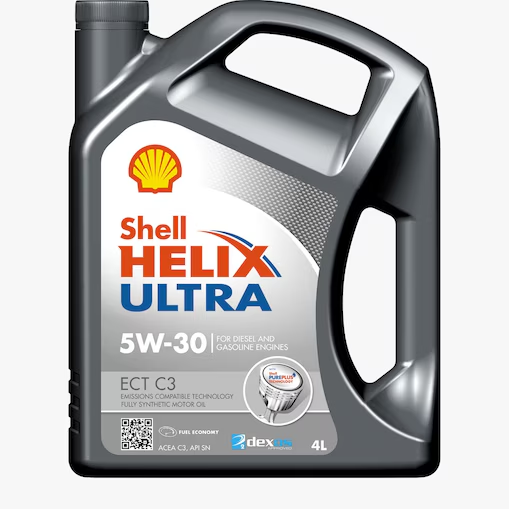
| Shell Helix Ultra ECT C3 5W‑30 | |
|---|---|
| SAE 5W‑30 | ✔ |
| ACEA C3 | ✔ |
| API SN/CF | ✔ |
| BMW Longlife‑04 | ✔ |
| MB‑Approval 226.5 / 229.31 / 229.51 / 229.52 | ✔ |
| Opel OV 0401547‑D30 / G30 | ✔ |
| Fiat 9.55535‑S3 | ✔ |
| Renault RN0700 / RN0710 | ✔ |
| VW 505.00 / 505.01 | ✔ |
| dexos2 | ❓ |
Oil specification key
✔ – Meets the required specification
❓ – Not explicitly stated (use caution; check your vehicle manual)
❌ – Does not meet required specification. Use may cause engine issues.
✔ – Meets the required specification
❓ – Not explicitly stated (use caution; check your vehicle manual)
❌ – Does not meet required specification. Use may cause engine issues.
As an Amazon Associate, we may earn from qualifying purchases.
Answer generated by AI.
Oil specifications for A/B14FP engine
SAE 5W-30
ACEA C3
API SN
VW 504.00
VW 507.00
Most common problems, symptoms & fixes for the A/B14FP engine.
Engine A/B14FP
Symptoms:
- Loss of power or reduced engine performance
- Rough idling or engine misfires
- Increased fuel consumption
- Check Engine Light (CEL) illumination
- Unusual noises from the turbocharger area
Diagnosis:
- Perform a diagnostic scan to check for fault codes related to ignition, fuel system, or turbocharger
- Inspect spark plugs and ignition coils for wear or damage causing misfires
- Check turbocharger operation, including boost pressure and actuator function
- Examine air intake system for leaks or blockages affecting airflow
- Inspect fuel injectors for clogging or malfunction
- Verify proper operation of the engine management sensors (MAF, MAP, oxygen sensors)
Fixes:
- Replace worn or fouled spark plugs and faulty ignition coils to restore proper combustion
- Clean or replace clogged fuel injectors to ensure correct fuel delivery
- Repair or replace faulty turbocharger components such as the actuator or boost control valve
- Fix any air intake leaks by replacing hoses or gaskets
- Reset the engine control unit (ECU) after repairs to clear fault codes and recalibrate sensors
- Regular oil changes with manufacturer-recommended oil to protect turbocharger and engine internals
Prevention:
- Adhere to scheduled maintenance intervals, especially oil and filter changes, to maintain engine health
- Use high-quality fuel and oil to prevent deposits and wear
- Avoid aggressive driving that can overheat or overstress the turbocharger
- Periodically inspect ignition components and replace them proactively
- Ensure the air filter is clean and replaced as needed to prevent debris entering the engine
- Monitor for early warning signs such as unusual noises or performance drops and address them promptly to avoid severe damage
Symptoms:
- Loss of power or reduced engine performance
- Rough idling or engine misfires
- Increased fuel consumption
- Check Engine Light (CEL) illumination
- Unusual noises from the turbocharger area
Diagnosis:
- Perform a diagnostic scan to check for fault codes related to ignition, fuel system, or turbocharger
- Inspect spark plugs and ignition coils for wear or damage causing misfires
- Check turbocharger operation, including boost pressure and actuator function
- Examine air intake system for leaks or blockages affecting airflow
- Inspect fuel injectors for clogging or malfunction
- Verify proper operation of the engine management sensors (MAF, MAP, oxygen sensors)
Fixes:
- Replace worn or fouled spark plugs and faulty ignition coils to restore proper combustion
- Clean or replace clogged fuel injectors to ensure correct fuel delivery
- Repair or replace faulty turbocharger components such as the actuator or boost control valve
- Fix any air intake leaks by replacing hoses or gaskets
- Reset the engine control unit (ECU) after repairs to clear fault codes and recalibrate sensors
- Regular oil changes with manufacturer-recommended oil to protect turbocharger and engine internals
Prevention:
- Adhere to scheduled maintenance intervals, especially oil and filter changes, to maintain engine health
- Use high-quality fuel and oil to prevent deposits and wear
- Avoid aggressive driving that can overheat or overstress the turbocharger
- Periodically inspect ignition components and replace them proactively
- Ensure the air filter is clean and replaced as needed to prevent debris entering the engine
- Monitor for early warning signs such as unusual noises or performance drops and address them promptly to avoid severe damage