Engine code
Vehicles using LT1 Code P engine list:
Which cars use the LT1 Code P engine and what oil to use. Common LT1 Code P engine faults, symptoms, diagnosis, prevention and repair.
- PONTIAC - Firebird 5.7, Trans Am (209kW) 1992–1993
- PONTIAC - Firebird 5.7, Trans Am (209kW) 1994–1997
Recommended oil for engine LT1 Code P engine.
Ask AI about any Engine code
Questions strictly about engine codes (brand/model/engine type/production years).
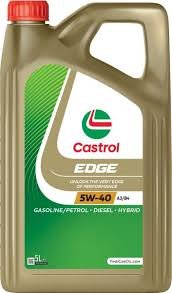
| Castrol EDGE 5W-40 A3/B4 | |
|---|---|
| ACEA A3/B4 | ✔ |
| API SP | ✔ |
| BMW Longlife-01 | ✔ |
| MB 229.3 / 229.5 / 226.5 | ✔ |
| Porsche A40 | ✔ |
| Renault RN0700 / RN0710 | ✔ |
| VW 502 00 / 505 00 | ✔ |
| Chrysler MS-12991 | ✔ |

| Ravenol VST 5W-40 | |
|---|---|
| ACEA A3/B4 | ✔ |
| API SP | ✔ |
| BMW Longlife-01 | ✔ |
| MB 229.5 / 226.5 | ✔ |
| Porsche A40 | ✔ |
| VW 502.00 / 505.00 | ✔ |
| Renault RN0700/0710 | ✔ |
| Chrysler MS-12991 | ✔ |

| Mobil 1 FS 5W-40 | |
|---|---|
| ACEA A3/B3/B4 | ✔ |
| API SN/SM/CF | ✔ |
| BMW Longlife-01 | ✔ |
| MB 229.3 / 229.5 | ✔ |
| Porsche A40 | ✔ |
| VW 502.00 / 505.00 | ✔ |
| Renault RN0700/0710 | ✔ |
| Chrysler MS-12991 | ✔ |

| Liqui Moly High Tech 5W-40 | |
|---|---|
| ACEA A3/B4 | ✔ |
| API SN/CF | ✔ |
| BMW Longlife-01 | ✔ |
| MB 229.5 | ✔ |
| Porsche A40 | ✔ |
| VW 502.00 / 505.00 | ✔ |
| Renault RN0700/0710 | ✔ |
| Chrysler MS-12991 | ✔ |
Oil specification key
✔ – Meets the required specification
❓ – Not explicitly stated (use caution; check your vehicle manual)
❌ – Does not meet required specification. Use may cause engine issues.
✔ – Meets the required specification
❓ – Not explicitly stated (use caution; check your vehicle manual)
❌ – Does not meet required specification. Use may cause engine issues.
As an Amazon Associate, we may earn from qualifying purchases.
Answer generated by AI.
Oil specifications for LT1 Code P engine
SAE 5W-30
API SJ
API SL
API SM
API SN
GM-LL-A-025
dexos1
Most common problems, symptoms & fixes for the LT1 Code P engine.
Engine LT1 Code P
Symptoms:
- Check Engine Light (CEL) illumination
- Rough idle or stalling
- Reduced engine power or hesitation during acceleration
- Poor fuel economy
- Engine misfires or backfiring
Diagnosis:
- Use an OBD-I scanner to retrieve specific trouble codes related to the LT1 engine.
- Inspect ignition components such as spark plugs, wires, distributor cap, and rotor for wear or damage.
- Check the Mass Air Flow (MAF) sensor and Throttle Position Sensor (TPS) for proper operation.
- Test the EGR (Exhaust Gas Recirculation) system for clogs or malfunctions.
- Examine vacuum lines and intake manifold gaskets for leaks.
- Verify fuel pressure and injector operation.
- Inspect the Knock Sensor and Oxygen Sensors for faults.
- Perform a compression test to rule out mechanical engine problems.
Fixes:
- Replace worn or fouled spark plugs and ignition wires.
- Clean or replace the MAF sensor and TPS if faulty.
- Repair or replace the EGR valve and clean associated passages.
- Fix vacuum leaks by replacing cracked hoses or gaskets.
- Replace faulty sensors such as Knock Sensor or Oxygen Sensors.
- Service or replace fuel injectors and ensure proper fuel pressure.
- Address mechanical issues found during compression testing, such as valve or piston problems.
- Clear codes after repairs and perform a test drive to confirm resolution.
Prevention:
- Follow regular maintenance schedules including timely spark plug and ignition component replacement.
- Use quality fuel and keep the fuel system clean.
- Regularly inspect and clean sensors and the EGR system.
- Maintain vacuum lines and intake gaskets to prevent leaks.
- Address any engine performance issues promptly to avoid further damage.
- Keep the cooling system in good condition to prevent overheating, which can affect engine sensors and components.
By adhering to these diagnostic steps and maintenance practices, owners of the LT1-equipped Pontiac Firebird Trans Am can minimize common issues and maintain reliable engine performance.
Symptoms:
- Check Engine Light (CEL) illumination
- Rough idle or stalling
- Reduced engine power or hesitation during acceleration
- Poor fuel economy
- Engine misfires or backfiring
Diagnosis:
- Use an OBD-I scanner to retrieve specific trouble codes related to the LT1 engine.
- Inspect ignition components such as spark plugs, wires, distributor cap, and rotor for wear or damage.
- Check the Mass Air Flow (MAF) sensor and Throttle Position Sensor (TPS) for proper operation.
- Test the EGR (Exhaust Gas Recirculation) system for clogs or malfunctions.
- Examine vacuum lines and intake manifold gaskets for leaks.
- Verify fuel pressure and injector operation.
- Inspect the Knock Sensor and Oxygen Sensors for faults.
- Perform a compression test to rule out mechanical engine problems.
Fixes:
- Replace worn or fouled spark plugs and ignition wires.
- Clean or replace the MAF sensor and TPS if faulty.
- Repair or replace the EGR valve and clean associated passages.
- Fix vacuum leaks by replacing cracked hoses or gaskets.
- Replace faulty sensors such as Knock Sensor or Oxygen Sensors.
- Service or replace fuel injectors and ensure proper fuel pressure.
- Address mechanical issues found during compression testing, such as valve or piston problems.
- Clear codes after repairs and perform a test drive to confirm resolution.
Prevention:
- Follow regular maintenance schedules including timely spark plug and ignition component replacement.
- Use quality fuel and keep the fuel system clean.
- Regularly inspect and clean sensors and the EGR system.
- Maintain vacuum lines and intake gaskets to prevent leaks.
- Address any engine performance issues promptly to avoid further damage.
- Keep the cooling system in good condition to prevent overheating, which can affect engine sensors and components.
By adhering to these diagnostic steps and maintenance practices, owners of the LT1-equipped Pontiac Firebird Trans Am can minimize common issues and maintain reliable engine performance.