Engine code
Vehicles using A28NET engine list:
Which cars use the A28NET engine and what oil to use. Common A28NET engine faults, symptoms, diagnosis, prevention and repair.
Ask AI about any Engine code
Questions strictly about engine codes (brand/model/engine type/production years).

| Castrol MAGNATEC 5W‑30 C3 | |
|---|---|
| SAE 5W‑30 | ✔ |
| ACEA C3 | ✔ |
| API SN/CF | ✔ |
| BMW Longlife‑04 | ✔ |
| MB‑Approval 226.5 / 229.31 / 229.51 / 229.52 | ✔ |
| Opel OV 0401547‑D30 / G30 | ✔ |
| Fiat 9.55535‑S3 | ✔ |
| Renault RN0700 / RN0710 | ✔ |
| VW 505.00 / 505.01 | ✔ |
| dexos2 | ✔ |

| Liqui‑Moly Chrome C3 5W‑30 | |
|---|---|
| SAE 5W‑30 | ✔ |
| ACEA C3 | ✔ |
| API SN/CF | ✔ |
| BMW Longlife‑04 | ❌ |
| MB‑Approval 226.5 / 229.31 / 229.51 / 229.52 | ✔ |
| Opel OV 0401547‑D30 / G30 | ✔ |
| Fiat 9.55535‑S3 | ✔ |
| Renault RN0700 / RN0710 | ✔ |
| VW 505.00 / 505.01 | ✔ |
| dexos2 | ✔ |

| Ridex Plus Active Energy C2/C3 5W‑30 | |
|---|---|
| SAE 5W‑30 | ✔ |
| ACEA C3 | ✔ |
| API SN/CF | ✔ |
| BMW Longlife‑04 | ✔ |
| MB‑Approval 226.5 / 229.31 / 229.51 / 229.52 | ✔ |
| Opel OV 0401547‑D30 / G30 | ✔ |
| Fiat 9.55535‑S3 | ❌ |
| Renault RN0700 / RN0710 | ✔ |
| VW 505.00 / 505.01 | ✔ |
| dexos2 | ✔ |
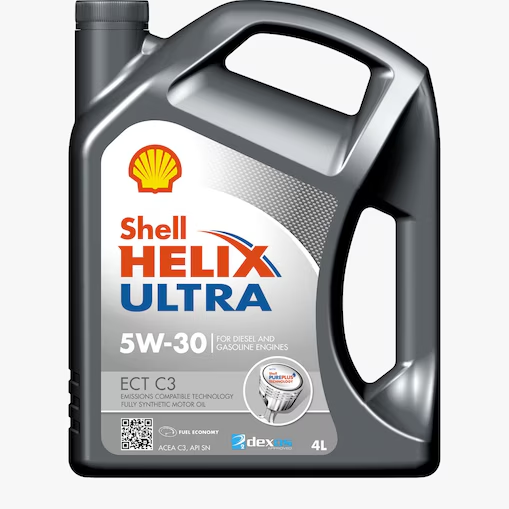
| Shell Helix Ultra ECT C3 5W‑30 | |
|---|---|
| SAE 5W‑30 | ✔ |
| ACEA C3 | ✔ |
| API SN/CF | ✔ |
| BMW Longlife‑04 | ✔ |
| MB‑Approval 226.5 / 229.31 / 229.51 / 229.52 | ✔ |
| Opel OV 0401547‑D30 / G30 | ✔ |
| Fiat 9.55535‑S3 | ✔ |
| Renault RN0700 / RN0710 | ✔ |
| VW 505.00 / 505.01 | ✔ |
| dexos2 | ❓ |
Oil specification key
✔ – Meets the required specification
❓ – Not explicitly stated (use caution; check your vehicle manual)
❌ – Does not meet required specification. Use may cause engine issues.
✔ – Meets the required specification
❓ – Not explicitly stated (use caution; check your vehicle manual)
❌ – Does not meet required specification. Use may cause engine issues.
As an Amazon Associate, we may earn from qualifying purchases.
Answer generated by AI.
Oil specifications for A28NET engine
SAE 5W-30
ACEA A3/B4
API SN
GM-LL-A-025
GM-LL-B-025
Most common problems, symptoms & fixes for the A28NET engine.
Engine A28NET
Symptoms:
- Loss of power and reduced acceleration
- Rough idling or engine misfires
- Increased oil consumption and occasional smoke from the exhaust
- Check Engine Light (CEL) illumination with related fault codes
- Turbo lag or reduced boost pressure
Diagnosis:
- Inspect for turbocharger wear or failure, including boost leaks in hoses and intercooler connections
- Check ignition coils and spark plugs for wear or fouling causing misfires
- Perform a compression test to assess cylinder health and detect possible valve or piston ring issues
- Scan for fault codes related to the turbo system, ignition, or fuel delivery
- Examine oil levels and quality to identify potential leaks or consumption problems
Fixes:
- Replace faulty ignition coils and worn spark plugs to restore smooth running
- Repair or replace damaged turbocharger components and fix any boost leaks
- Address oil leaks by replacing seals or gaskets as necessary
- Clean or replace the mass airflow sensor (MAF) and throttle body if dirty
- Perform an engine oil and filter change using manufacturer-recommended grades to maintain lubrication
- In severe cases, rebuild or replace engine components such as piston rings or valves if compression is low
Prevention:
- Regularly service the turbo system, including checking hoses and intercooler for leaks
- Use high-quality engine oil and adhere strictly to oil change intervals to prevent sludge and wear
- Replace spark plugs and ignition components at recommended intervals to avoid misfires
- Avoid prolonged idling and allow the turbo to cool down after hard driving to extend turbo life
- Keep the air intake system clean and free of debris to ensure proper airflow and combustion efficiency
Symptoms:
- Loss of power and reduced acceleration
- Rough idling or engine misfires
- Increased oil consumption and occasional smoke from the exhaust
- Check Engine Light (CEL) illumination with related fault codes
- Turbo lag or reduced boost pressure
Diagnosis:
- Inspect for turbocharger wear or failure, including boost leaks in hoses and intercooler connections
- Check ignition coils and spark plugs for wear or fouling causing misfires
- Perform a compression test to assess cylinder health and detect possible valve or piston ring issues
- Scan for fault codes related to the turbo system, ignition, or fuel delivery
- Examine oil levels and quality to identify potential leaks or consumption problems
Fixes:
- Replace faulty ignition coils and worn spark plugs to restore smooth running
- Repair or replace damaged turbocharger components and fix any boost leaks
- Address oil leaks by replacing seals or gaskets as necessary
- Clean or replace the mass airflow sensor (MAF) and throttle body if dirty
- Perform an engine oil and filter change using manufacturer-recommended grades to maintain lubrication
- In severe cases, rebuild or replace engine components such as piston rings or valves if compression is low
Prevention:
- Regularly service the turbo system, including checking hoses and intercooler for leaks
- Use high-quality engine oil and adhere strictly to oil change intervals to prevent sludge and wear
- Replace spark plugs and ignition components at recommended intervals to avoid misfires
- Avoid prolonged idling and allow the turbo to cool down after hard driving to extend turbo life
- Keep the air intake system clean and free of debris to ensure proper airflow and combustion efficiency