Vehicles using 808 engine list:
- RENAULT - Espace IV 2.0 dCi 130 DPF (96kW) 2006–2007
- RENAULT - Laguna III 2.0 dCi 130 DPF (96kW) 2007–2015
- RENAULT - Laguna III 2.0 dCi 130 (96kW) 2007–2015
- RENAULT - Espace IV 2.0 dCi 130 DPF (96kW) 2007–2010
- RENAULT - Espace IV 2.0 dCi 175 DPF (127kW) 2007–2014
Recommended oil for engine 808 engine.
Ask AI about any Engine code
Questions strictly about engine codes (brand/model/engine type/production years).

| Castrol MAGNATEC 5W‑30 C3 | |
|---|---|
| SAE 5W‑30 | ✔ |
| ACEA C3 | ✔ |
| API SN/CF | ✔ |
| BMW Longlife‑04 | ✔ |
| MB‑Approval 226.5 / 229.31 / 229.51 / 229.52 | ✔ |
| Opel OV 0401547‑D30 / G30 | ✔ |
| Fiat 9.55535‑S3 | ✔ |
| Renault RN0700 / RN0710 | ✔ |
| VW 505.00 / 505.01 | ✔ |
| dexos2 | ✔ |

| Liqui‑Moly Chrome C3 5W‑30 | |
|---|---|
| SAE 5W‑30 | ✔ |
| ACEA C3 | ✔ |
| API SN/CF | ✔ |
| BMW Longlife‑04 | ❌ |
| MB‑Approval 226.5 / 229.31 / 229.51 / 229.52 | ✔ |
| Opel OV 0401547‑D30 / G30 | ✔ |
| Fiat 9.55535‑S3 | ✔ |
| Renault RN0700 / RN0710 | ✔ |
| VW 505.00 / 505.01 | ✔ |
| dexos2 | ✔ |

| Ridex Plus Active Energy C2/C3 5W‑30 | |
|---|---|
| SAE 5W‑30 | ✔ |
| ACEA C3 | ✔ |
| API SN/CF | ✔ |
| BMW Longlife‑04 | ✔ |
| MB‑Approval 226.5 / 229.31 / 229.51 / 229.52 | ✔ |
| Opel OV 0401547‑D30 / G30 | ✔ |
| Fiat 9.55535‑S3 | ❌ |
| Renault RN0700 / RN0710 | ✔ |
| VW 505.00 / 505.01 | ✔ |
| dexos2 | ✔ |
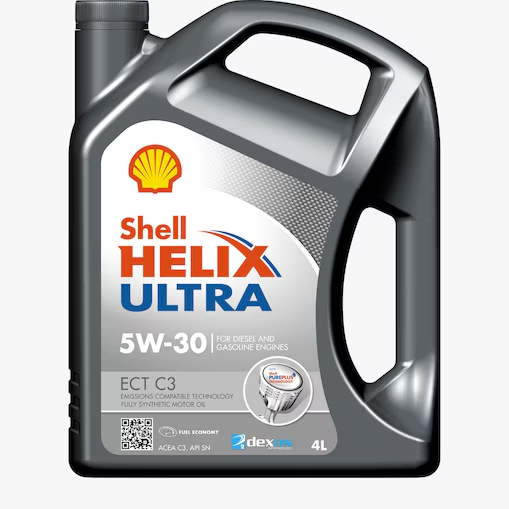
| Shell Helix Ultra ECT C3 5W‑30 | |
|---|---|
| SAE 5W‑30 | ✔ |
| ACEA C3 | ✔ |
| API SN/CF | ✔ |
| BMW Longlife‑04 | ✔ |
| MB‑Approval 226.5 / 229.31 / 229.51 / 229.52 | ✔ |
| Opel OV 0401547‑D30 / G30 | ✔ |
| Fiat 9.55535‑S3 | ✔ |
| Renault RN0700 / RN0710 | ✔ |
| VW 505.00 / 505.01 | ✔ |
| dexos2 | ❓ |
Oil specification key
✔ – Meets the required specification
❓ – Not explicitly stated (use caution; check your vehicle manual)
❌ – Does not meet required specification. Use may cause engine issues.
✔ – Meets the required specification
❓ – Not explicitly stated (use caution; check your vehicle manual)
❌ – Does not meet required specification. Use may cause engine issues.
As an Amazon Associate, we may earn from qualifying purchases.
Answer generated by AI.
Oil specifications for 808 engine
ACEA C4
ACEA C5
API SN
API SN Plus
API SP
RN0720
RN17
RN17 FE
RN17 RSA
Most common problems, symptoms & fixes for the 808 engine.
Engine 808
Symptoms:
- Loss of power and reduced acceleration
- Excessive smoke from the exhaust, especially black or blue smoke
- Engine warning light (check engine) illumination
- Rough idling or stalling
- Increased fuel consumption
Diagnosis:
- Check for fault codes using an OBD-II scanner to identify specific sensor or system failures
- Inspect the diesel particulate filter (DPF) for clogging or regeneration issues, common in these engines
- Examine the turbocharger for signs of wear or failure, such as unusual noises or reduced boost pressure
- Test the fuel injection system, including injectors and high-pressure pump, for leaks or malfunction
- Verify the condition of the EGR (Exhaust Gas Recirculation) valve, which can become clogged with soot
Fixes:
- Perform a forced DPF regeneration or replace the DPF if severely clogged or damaged
- Clean or replace the EGR valve to restore proper exhaust gas flow and reduce emissions
- Repair or replace faulty fuel injectors or the high-pressure fuel pump to restore fuel delivery
- Service or replace the turbocharger if boost pressure is insufficient or mechanical failure is evident
- Reset the engine control unit (ECU) after repairs to clear fault codes and recalibrate sensors
Prevention:
- Use high-quality diesel fuel and adhere to recommended oil change intervals to reduce soot buildup
- Avoid frequent short trips that prevent the DPF from reaching regeneration temperature
- Regularly inspect and maintain the turbocharger and fuel system components
- Follow manufacturer guidelines for engine warm-up and cool-down procedures to prolong component life
- Schedule periodic diagnostic checks to detect early signs of component wear or failure
Symptoms:
- Loss of power and reduced acceleration
- Excessive smoke from the exhaust, especially black or blue smoke
- Engine warning light (check engine) illumination
- Rough idling or stalling
- Increased fuel consumption
Diagnosis:
- Check for fault codes using an OBD-II scanner to identify specific sensor or system failures
- Inspect the diesel particulate filter (DPF) for clogging or regeneration issues, common in these engines
- Examine the turbocharger for signs of wear or failure, such as unusual noises or reduced boost pressure
- Test the fuel injection system, including injectors and high-pressure pump, for leaks or malfunction
- Verify the condition of the EGR (Exhaust Gas Recirculation) valve, which can become clogged with soot
Fixes:
- Perform a forced DPF regeneration or replace the DPF if severely clogged or damaged
- Clean or replace the EGR valve to restore proper exhaust gas flow and reduce emissions
- Repair or replace faulty fuel injectors or the high-pressure fuel pump to restore fuel delivery
- Service or replace the turbocharger if boost pressure is insufficient or mechanical failure is evident
- Reset the engine control unit (ECU) after repairs to clear fault codes and recalibrate sensors
Prevention:
- Use high-quality diesel fuel and adhere to recommended oil change intervals to reduce soot buildup
- Avoid frequent short trips that prevent the DPF from reaching regeneration temperature
- Regularly inspect and maintain the turbocharger and fuel system components
- Follow manufacturer guidelines for engine warm-up and cool-down procedures to prolong component life
- Schedule periodic diagnostic checks to detect early signs of component wear or failure